Showing posts with label Real Food. Show all posts

Friday, December 19, 2014

Radically Natural Recipe: Winter Spice Oatmeal Breakfast Cookies (plus Soaked Steel Cut Oats)


We usually end up with leftover cooked oats on the mornings we eat breakfast porridge.  This recipe (borrowed and tweaked from lifebyjeanie.com) combines leftover cooked oats with gluten free flours and warm wintery spices.  We eat them for breakfast, smeared in butter, but you can eat them as cookies anytime.  They are soft and filling.  Enjoy!

[Fun fact...when made with sunflower butter, your cookies will turn green.  This has happened to me, and I just learned that the odd hue is caused by the sunflowers' chlorophyll reacting with the baking soda.  Check this out.]


Winter Spice Breakfast Cookies

1 cup coconut oil OR 1/2 cup coconut oil and 1/2 cut butter OR 1 cup nut butter
3/4 cup raw coconut sugar OR 1/2 cup raw honey
2 eggs
3 tsp vanilla
2 cups gluten free flour mix (check out the video below)
1 tsp baking soda
1 tsp sea salt
1 Tb cinnamon
1/2 tsp. each ginger, nutmeg, cloves (more to taste as desired)
1 cup raisins
1/2 cup raw cacao nibs
2 cups cooked soaked oatmeal (recipe below)
4 Tb raw milk OR yogurt

Combine the wet ingredients (not the oats or milk yet) and mix well.  Incorporate the dry ingredients (minus raisins and nibs), then add the milk and the cooked oatmeal.  Finally add the raisins and the cacao nibs.  Mix until well combined.  Spoon onto greased or lined (silpat, parchment) cookie sheets.  Bake at 375º for 12 to 15 minutes.  The cookies will not spread and they will be golden and soft when finished (though thoroughly cooked inside...should not be gummy).

Here is a helpful video tutorial on making your own gluten free flour mix (thanks for the link, Amy!).


Soaked Steel Cut Oats (with cooking shortcut)

I have seen varying NT-style methods for preparing oats.  Here is my method.  If you don't already know why you should soak your oats and other grains (in an acidic medium) before consumption, please read Nourishing Traditions and/or the many available articles on the topic (I'll post a few links below).

Because oats are nearly devoid of phytase, the enzyme activated by soaking that helps to break down phytic acid, it is important to add a small amount of a grain that does contain phytase during your oat soak.  I use buckwheat because it is a gluten-free grain (as are oats when not contaminated).  The ratio is 1 Tb. buckwheat groats to 1 cup oats.  I usually cook steel cut oats for improved nutrient and taste profile.

My current method of "quicker" steel cut oats for breakfast is as follows.  On any given morning, I begin the soaking process by putting my oats and buckwheat into my pot with a small amount (about 1/4 cup) of kefir or a few generous dashes of ACV.  I then fill the pot with nontoxic water, basically in a 2-1 water to grain ratio.  (The oats will expand.)  I allow the oats to soak all day (minimum 12 hours).  Before bed, I rinse the oats with fresh water (some people do, some people don't...), then return them to the pot and cover the oats with water to about one inch above the oats' level.  I turn on the stovetop to medium and bring the oats to a gentle boil.  At that point, I turn off the heat, cover the pot with its lid, and go to bed.  In the morning, the oats will be cooked, having slowly absorbed the liquid overnight, and will only need to be heated before consumption.  I serve with generous amounts of butter, cinnamon, some raisins and raw milk.  Leftover oats are baked into breakfast cookies.

[Some suggest that oats should be soaked for 24 hours.  This is not bad advice.  The longer the soak, the more nutrients become available.  To soak for 24 hours with my method, just start the soaking on Evening A, and rinse and "cook" on Evening B.]


The "Why" of Soaking Grains


Monday, September 8, 2014

What? No Bread with That Butter?

People who know me well know me as a butter pusher.  Fat (wonderful fat, nourishing fat, necessary fat, delicious fat, good fat) is the most essential human nutrient, and my favorite fat is pastured butter...homemade from raw grass-fed milk preferably, but hey, that's hard to keep up with 365 days a year...I buy butter, too!  Good butter is so beloved in my household that my younger son likes to give pounds of butter away to special people as gifts...you know he really thinks highly of you when he wants to send you home with some butter.

As my husband and I share with people how important good butter is in the diet and how essential it is to eat lots of it daily, we inevitably hear this question:  How do you eat butter when you don't eat bread?  Granted, we are beginning to eat some homemade sourdough breads of late, but it isn't a regular occurrence; and we were grain-free for two years on the GAPS healing regimen.  So the question remains...how do you eat lots of butter when you don't eat lots of grain-based foods?

I thought I'd enlist my kids to help spread the butter love and share how we eat our butter, hopefully inspiring others to eat more butter without thinking it has to be on bread.  The response I got was funny...my oldest son looked at me, head cocked, eyebrows raised and asked, "What do you mean, people don't know how to eat butter?  You just put it on everything."  I love it!  He is properly butter indoctrinated.


Basically, we just put butter on all our food.  Whatever the meal is that I've prepared, we just top it with butter.  Eggs for breakfast?  Butter them...and the pastured bacon that goes with them.  Steak?  Finish it with a pat of butter.  The accompanying roasted root veggies get buttered, too.  Salmon with carmelized onions and asparagus?  Butter, please!  Roast duck with butternut squash and pureed cauliflower?  How could you not drench with butter?!  We even put butter in our soups...it melts, and it's delicious.

We all know it's important to eat healthy vegetables with our main meals, so if you aren't doing a raw salad, try veggie sautes.  It's a regular standby here, and so easy, nutritious and delicious...just saute onions, garlic, carrots, fennel, summer or winter squash, kale or chard, whatever you have on hand!  When you plate the meal, just add butter!  Steamed veggies?  Of course they love butter.  Oh, how scrumptious veggies are with butter!  If you are eating any form of cooked vegetables, you have a butter vehicle just waiting to be adorned.


I make a lot of one-pot meals with meats (lamb, pork, beef) and veggies...I like fewer pots to clean.  So whether it's Shepherd's Pie or No-Noodle Lasagna or just plain old beef and veggie stir fry, top it off with a spoonful of butter!  Many cultures drizzle all their dishes with olive oil.  We do that, too.  And we also dollop with butter...same concept.

Baked winter squash, baked sweet potatoes, baked all-other-kind-of potatoes, absolutely beg for butter.  And pureed cauliflower spiked with lots of butter (aka GAPS mashed potatoes) is a surefire crowd pleaser.

My kids butter their cheese sometimes.  And when I bake cookies (gluten free at this point), we butter those, too.  My husband likes to eat pick-me-up spoonfuls of butter drizzled with raw honey.  The kids love "chocolate treats," basically butter/cacao mousse.

If you eat grains, all the better to add more butter...rice, quinoa, millet, morning oats...whether plain or pilaf, accompanying grains are always better topped with butter.  Tortillas?  Top with butter, cheese, avocado, salsa, what have you.  Crackers?  Butter them.  Organic popcorn?  Come on, that's an easy one!

So, how do we eat our butter?  Well, I think the better question is how do we not?  (We have yet to dip cold raw veggies in plain butter...though celery sticks with butter and raisins are good.)  The key in my mind is that we are creating meals with Real Food from scratch...and good food begs to be accompanied by good butter.  And olive oil, too...I certainly don't mean to discriminate.  My passion for butter doesn't blind me to the other good fats, we use them all...coconut, lard, duck fat...they all have their place in the kitchen, some for prep, some for finishing.  

But around here, butter reigns supreme.  So grab some grass-fed butter and drip, dollop, scoop, smother...you'll wonder how your meals ever made it to your stomach without butter.


Recipe: GAPS Mashed Potatoes...Pureed Cauliflower

(Super easy, super delicious.  After 6 months on the GAPS protocol, you can barely tell the difference in flavor between this and mashed potatoes...well, we couldn't.  And we took this recipe with us after GAPS, along with many others, because it is just so delicious and nutritious!  It's not really a "GAPS" recipe as much as it's just another way to eat great food.) 

Steam a head or two (depending on size) of cauliflower in water.  When fork tender, put the cauliflower and 1/2 cup of the cooking water into your blender.  Add 1/2 cup butter and some real salt to taste.  Blend until smooth.  You can adjust the amount of liquid to suit the consistency to your taste.

For post-GAPS folks, blend the cauliflower with raw grass-fed milk rather than the cooking liquid, and don't forget lots of butter!...this version is even creamier.  Yum!

Friday, August 8, 2014

Radically Natural POV: Avoiding GMOs Isn't Enough

I've noticed a little trend of late, at our local farmer's market and natural food store.  I'm hearing inklings of a new twist on the search for clean food.  "As long as it's non-GMO, you're OK...just avoid the GMOs."  I have been told that customers are less willing to pay for organic...they only care that the choices are non-GMO...a less expensive option.  It seems like in the careful consumer's search for "affordable" food, GMO avoidance has taken the spotlight and the chemical soup that we have been so ardent to avoid for so long has begun to fade from our fears.


Image from Wikipedia...Gives new meaning to "food safety," eh?
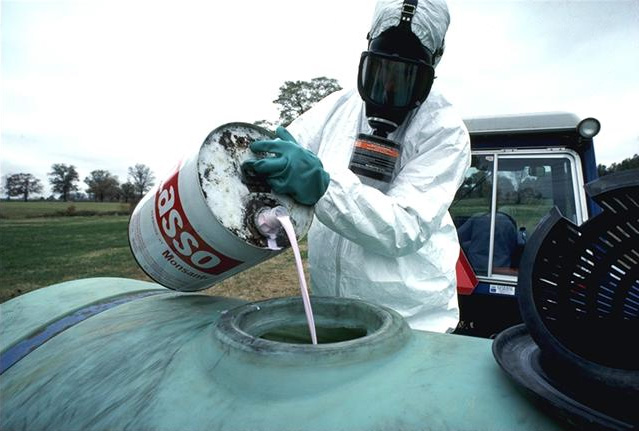
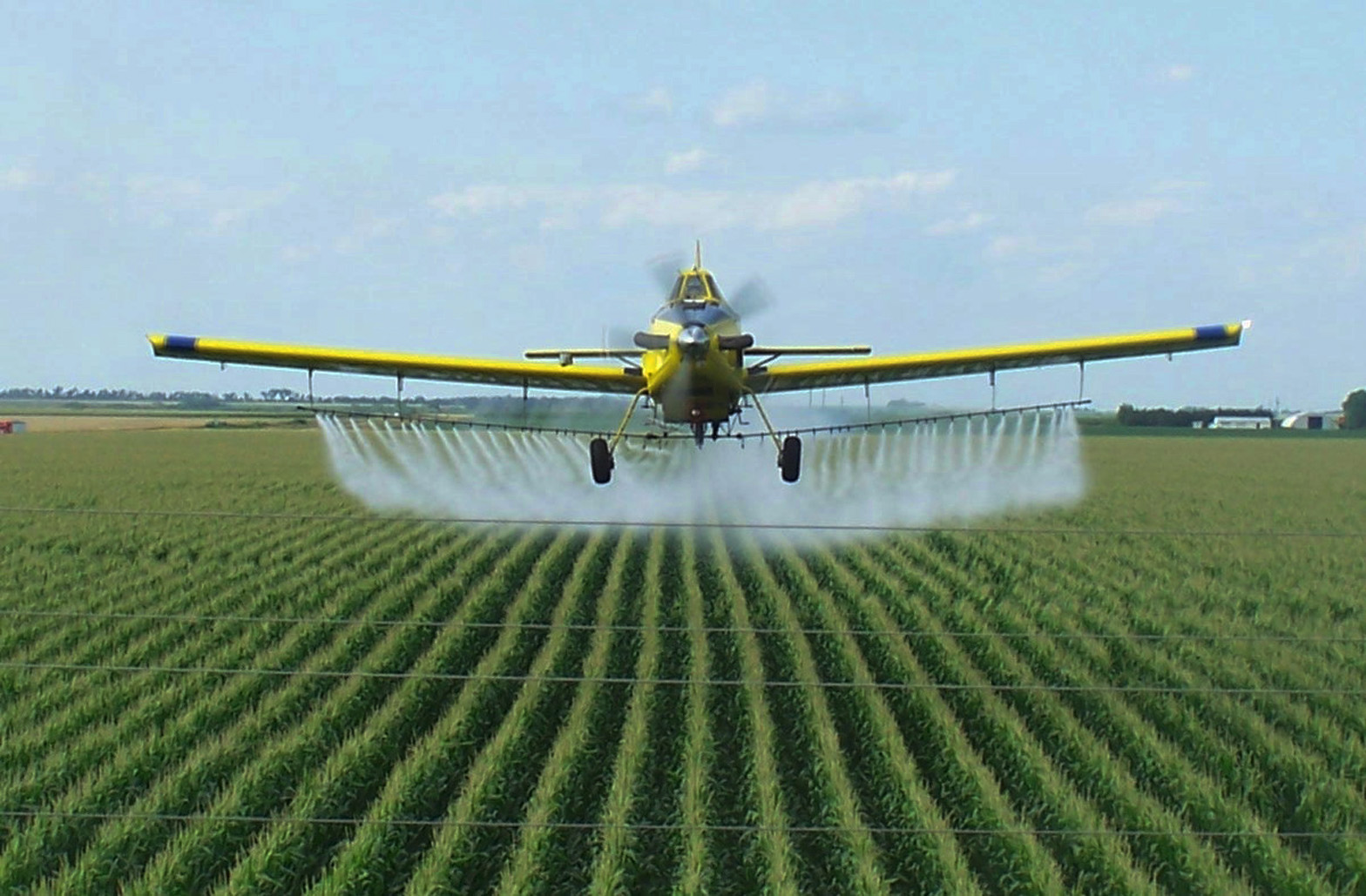
The GMO scare has become such a prominent focus in the Real Food realm that I wonder if we have lost sight of the bigger picture.  Of course we should avoid GMOs, of course they are not safe, of course they are not Real Food.  But the dangers of GMOs are only one part of the picture.  We can't let the GMO spectre overshadow the reality of toxic chemicals in our soil and our food supply.  The use of pesticides (insecticides, herbicides and fungicides) and synthetic fertilizers is the cornerstone of industrial farming.  These are the dangerous chemicals that health advocates warned us about so fervently in the past decades (how can we forget Silent Spring?), and we should not lessen our resolve to avoid them now.  Research continues to show that exposure to these chemicals can have serious and lasting health consequences for generations (with an emphasis on negative endocrine effects...ie infertility).
We used to have chickens and ducks.  We currently have goats and pigs.  We know firsthand the costs of organic inputs.  My husband's recent search to find local, less expensive, clean grains to feed the animals we raise for our food has been disheartening.  Most of the growers in our area are using the toxic Agent Orange component, 2,4-D, a carcinogenic and endocrine disrupting herbicide.  One farmer my husband spoke with was quick to claim that his grains were non-GMO, but he admitted he did use 2,4-D...the dangers of which he side-stepped with a bit of spin that sounded like a page out of the county extension agent's handbook.

The move to 2,4-D does not bode well for the future of food.  That herbicide is gaining popularity because it works when Roundup does not.  Yes, you heard me correctly.  We know how toxic Roundup is...but 2,4-D is apparently worse.  (And sold for "home" use as well...let us not forget the toxic lawns that American children play on regularly...2,4-D is one of the most popular lawn herbicides used.)  In fact, Dow and Monsanto have already been seeking governmental approval for their next wave of chemical brews to combat the ever-growing "weed" and pest resistance.  As they all do, this widely used herbicide will contribute to the proliferation of "super weeds," which will herald Big Ag's cry for even stronger poisons.  Where does it end?!


Image from heartlandbeat.com...BigAg food prep.
Perhaps I have an overactive imagination, but I can't help feeling that while the heretofore chemically cautious consumers are being distracted by the evil that is GMOs, the chemical companies are laughing all the way to the bank (as they continue to spread their ever-worsening poisons across America).  Of course, big chem and big biotech go hand in hand, as the increasing use of stronger chemicals is being touted by said industries as necessary for their GM crops.

We need to be wary of losing our original zeal for clean, organic, Real Food.  And because commercial (certified) Organic growers are allowed to use some pesticides (yes, even the synthetic kind), we need to be avid about finding clean food sources or growing our own.  If we become lulled into a false sense of security by focusing solely on GMOs, we will return ourselves to the days of eating poison and paying the piper with our physical demise and our children's compromised health future.  The costs of complacency are too high.  

Yes, truly organic food is more expensive, but what is your health worth?  Your children's health...their brain function, immune function, future fertility?  Why are we fooling ourselves into accepting the industry's chemical brews?  Perhaps we need a reminding nudge about what we are turning a blind eye to...maybe a "light read" of the many legal chemical pesticides available to food producers.  (Lists are published state by state...check out this one for New York).  We need to remind our friends, our families, our neighbors, ourselves that the chemical toxins in the food supply have serious and lasting deleterious health affects.  

Nontoxic food costs more to produce; it costs more to purchase.  But...Pay now or pay later.  Such is the reality of dealing with poisons in our food.

Revival of Highly Toxic Herbicide
Pesticide Action Network: Pesticides on Food
2,4-D Fact Sheet
Farmer Speaks Out Against 2,4-D
Big Ag Doesn't Want You to Care about Pesticides
Pesticide Exposure Linked to Adverse Affects Three Generations Later
Beyond Pesticides (Consumer Safety Organization)


Friday, April 11, 2014

Radically Natural Recipe: How to Butter a Biscuit


I made biscuits the other night for dinner, to accompany beef broccoli soup.  Our middle son, affectionately known as the butter fiend, demonstrated for us the proper way to apply butter to bread.  (Pardon the deficient photo, but I can assure you that all sides and the innards were coated.)  Note the tooth marks.  Dear Weston would be proud, I dare say? 


Soaked Sprouted Biscuits

3 1/2 cups sprouted grain (I used spelt)
2 cups raw kefir
4 T. melted butter/coconut oil/lard (I used coconut oil and butter)
1 1/2 tsp. sea salt
2 tsp. baking soda


  • Mix flour with kefir, add remaining ingredients and blend into smooth dough.
  • Allow to sit for a few hours if possible.
  • Roll out on floured surface, cut out with biscuit cutter or a glass.
  • Alternately take pieces of dough, roll balls in palm of hand and flatten on baking tray (these are less attractive, but get the job done).
  • Bake on buttered baking sheet or use liner (silpat or parchment paper), 350º for about 40 minutes.

Lather with butter and enjoy!

This was one of our "leaving GAPS" grain trials.  No one reacted badly to the biscuits except for me...but when the kids can tolerate a food, I cry success!  I am testing about three grain foods a week, making sure they are soaked and/or sprouted.  


Wednesday, January 29, 2014

Is Your Grass-Fed Butter Really Pastured?

As a butter lover (fiend...pusher), I cannot sing the praises loudly enough of pastured butter.   You know what I'm talking about, fellow fanatics...The golden goodness of the nutrient-rich fat that is born of sunshine, green grasses, and healthy cows.  And we also know how rare real pastured butter is...that free-ranging, grass-fed non-franken milk cows are not a dime a dozen.  I, like many of you, have had a bit of a love affair with Kerrygold butter...second only to New Zealand, I believe, Irish pastures are green nearly year-round (don't quote me on that, though).

How might you respond if you discovered that your pastured butter wasn't?  That the grass-fed milk cows producing your butter were were living in a huge barn, eating delivered grass?  That the pastures weren't receiving the benefit of nature's most natural, nutritious, free fertilizer?  Welcome to the "zero grazing" grass-fed method.  

What defines pastured?  Is a "zero grazing" grass-fed dairy operation producing pastured milk?  Will that milk be sufficiently rich in vitamin D (are barn skylights enough)?  Is this a nourishing and sustainable option?

I'm not making any accusations, any statements about any brands of butter.  I have no knowledge of which companies are purchasing whose milk.  But the following video makes me wary of the grass-fed dairy products I might be purchasing.  I don't think the grass is the only important component in Real Milk products.  I suppose this is another reason that being far from our food production means lack of accountability and real consumer-driven quality control.

Observe the feeding method of this Irish dairy.  Sure, it's clean enough ... the cows aren't knee-deep in feces like typical feedlots or commercial dairy operations.  But is this really pastured dairy?  (And note the breed...the highly manipulated Holstein, bred for unnaturally massive milk production rates, and carriers of the troublesome mutated A1 protein.)


Contrast with this video of my friend's property, where they raise a few Guernseys (an "old world" heritage breed that naturally produces A2 milk, more easily digestible and less problematic for humans).  Are the differences between the "zero grazing" grass-fed model and the genuine pastured model significant?  You decide.


Tuesday, October 22, 2013

Radically Natural POV: Real Food Matters


[On the heels of attending the regional WAPF conference in Portland last month, I had every intention of summarizing my notes and writing about the highlights.  However, life got in the way, as usual.  So until I can concoct radically new material, I wanted to revitalize some older material, injecting my conference enthusiasm into the message.  This week I've been cogitating on how and why Real Food matters so much, for every aspect of our health...mental and physical.  I hope you consider how these truths can be practiced in your lives, or how you might share the gift of nourishing knowledge with others.]

You are what you eat. Trite? Perhaps. True? Absolutely!

Saturday, February 2, 2013

Radically Natural Recipe: Indulgent, Nourishing, Healing (GAPS-friendly) Cacao Bites (aka Chocolates!)

I have the best husband in the world.  I'm sure many of you ladies would say the same (that you have the best husband in the world, not that mine is, LOL), but I need to sing the praises of my man.  I happen to be 13 weeks pregnant.  I suffered a miscarriage in September, but to my shock found myself pregnant again soon after.  I have a history of infertility (my stint with veganism didn't help), miscarriages and rather uncomfortable pregnancies.  So while we are ecstatic about this newest child, we are being cautiously optimistic at this point.  My pregnancy this time is typical of my other successful pregnancies, though, meaning I'm sick, sick, sick (9 month stomach flu, anyone?)...but on the bright side, I'm keeping most of my food down, which is an improvement over past pregnancies (thanks to GAPS).  

Monday, January 28, 2013

Winners of Deep Nutrition Giveaway and a Disclaimer

Thanks to all of you who participated in the Radical Reading Room Deep Nutrition giveaway.  The winners, Katy and Sarah, will receive their books soon.

Someone this week rightly pointed out to me that Sally Fallon, in the Fall 2012 issue of Wise Traditions, the WAPF journal, gave a reluctant thumbs down to Shanahan's book with a lengthy critique.  I've read Fallon's critique and I do agree with some of her concerns, but not all.  When I read Deep Nutrition, I certainly didn't agree with every point or assertion Shanahan made, but I don't agree with everything Fallon says, either.  Few of us will agree with 100% of what we read, no matter the source.  That's why we need to read many books on a topic to build a body of knowledge, rather than relying on one or two sources.  Overall, I think both WAPF and Shanahan (and other traditional nutrition authors) have wonderful information to share with the public about how to nourish ourselves and be well.

Saturday, January 19, 2013

Radically Natural Reading Room: Deep Nutrition Giveaway

My readers likely understand by now that I am not fond of the conventional allopathic medical system. My years of study and experience in these realms have convinced me that the modern medical system may have useful diagnostic tools, but their hopelessly limited and sometimes fraudulent paradigm (fed by conventional medical school training) do not provide MDs with the necessary tools for understanding causality and providing cure. 

But every so often I encounter an “outside the box” enlightened unconventional doctor whose work I appreciate and recommend to others. Cate Shanahan is one such doctor. It is obvious that she refused to remain inside the limited paradigm her medical education provided. In her entertaining and easily accessible book, Deep Nutrition: Why Your Genes Need Traditional Food, Shanahan explains, in layman’s terms, the science behind a truth I have been longing for our culture to accept: You can change your DNA. You are not the fatalistic victim of “set in stone” genetics as much as you are of the choices you make about what goes into your body. Shanahan shows how you “create and preserve genetic wealth.”

Thursday, January 10, 2013

If You Still Need a Visual to Understand the Factory Farm System...

I love this creative portrayal of life in a factory farm.  The video was produced for Animals Australia, a project hoping to end the factory farm system.  Maybe it's a bit "over-emotional," maybe it feeds into the vegan agenda (I absolutely agree animal cruelty is outrageous.  I believe farmers should practice honorable animal husbandry, treating animals with respect and giving them nourishing, happy lives.  But I'm convinced we need to eat animals to be fully healthy...sorry vegans, we part ways there).  

Friday, January 4, 2013

Check Out Your "Organic" Milk Production...

The pictures say it all.  For anyone still convinced that Organic commercial milk is the way to go, take a look at the photo story of one of Horizon Farm's milk facilities.

The Cornucopia Institute Visits Horizon Family Farms in Idaho


The milk is coming from primarily confined, grain-fed cows living in less-than-pristine conditions.  It's no wonder the dairy industry and the CDC is so adamant that milk be uber-pasteurized and denatured...covering up the dirty dairy industry takes a lot of manipulations.  But the Organic dairy industry is far superior, right?  I'm not convinced...and I hope you aren't either.

Friday, December 28, 2012

Skim Milk Is Not a Nourishing Food

The fraudulent "lipid hypothesis" that has given our culture (good) fat phobia since the 1950s...and done wonders for the food and drug industry...has perpetuated the myth that butter is bad and that skim milk is healthy.  Au contraire!  Skim milk is not a nourishing food.  If you aren't drinking whole (raw grass-fed) milk, you aren't doing your body good.

The essential nutrients in milk is in its fat.  Cream from grass-fed cows is rich in vitamins A, D3, and K2 (industrial pasteurized milk is "fortified" with synthetic vitamin D2, known to be toxic to the liver).  Real milk's vitamins (A, D, E, K) and its CLA (conjugated linoleic acid) are fat-soluble, and are transmitted via the cream (they exist in the fat of the milk)...and they cannot be absorbed, nor utilized, without the fat.   Low-fat (commercial) milk is always supplemented with vitamins, because they are naturally missing after the milk's processing.

Saturday, December 8, 2012

Fat Is Your Friend!

I have had so many titles for this long-in-the-works article swimming about in my brain...
  • Lean Meat: The Scourge of the American Diet
  • Embrace Fat: Cholesterol Is Not the Enemy
  • Real Fat: The Essential Human Nutrient
  • When Bad "Science" Won't Die: The Lipid Lie
  • Fabulous Fat: The Beautiful Truth about a Fabulous Nutrient, Starring Cholesterol, Your Hormones' Best Friend!
(That last one seemed just a tad long, LOL!)


Tuesday, December 4, 2012

Help Stop Monsanto-Friendly Bill Riders

Urgent action alert from WAPF:


Tell Congress to Dump the Monsanto Rider
Congress is back in session, and it has to address how to fund the government in the coming year.  The dangerous “Monsanto” rider is still on the table for the 2013 Appropriations bill, and we need to stop it!

Though cloaked in "farmer-friendly" language, this" farmer assurance provision" is simply a biotech industry ploy to continue to plant genetically modified (GMO) crops even when a court of law has found they were approved illegally. The provision undermines USDA's oversight of GMO crops and interferes with the U.S. judicial review process.  It is also completely unnecessary and offers "assurance" only to biotech companies like Monsanto, not farmers.

Tuesday, November 27, 2012

Are We Losing the Food Fight?!

Lately, my stomach has begun to sink when I hear my husband reading the Acres USA magazine.  "Uh-oh," he'll say.  "That's not good."  Or, "You've GOT to be kidding me!"

"What is it now?"  I ask...wondering if I should query.  Do I really want more bad news?  (I'm still recovering from the assault on heritage hogs in Michigan.)

He replies with a scowl.  "You won't believe what's happening in Bellingham."


Friday, November 9, 2012

Radical Reading Room: Book Giveaway

Welcome to my first giveaway...I'm excited and I hope you are, too.  I have no doubt most of you are familiar with how these rafflecopter giveaways work, but it's new to me...I'm a techno dummy!  (I'm just hoping I set this up properly, LOL.)


The prize for this contest is Ramiel Nigel's, Cure Tooth Decay.  In this excellent health DIY resource, Nigel describes the Traditional Foods that can fight and cure what ails our teeth.  This WAPF-inspired resource sits on my shelf, and I look forward to adding a copy to one of your shelves.

Sunday, October 14, 2012

My Olive Oil Fridge Test...Who Passed?

After reading multiple posts this summer about the Extra Virgin Olive Oil controversy, I decided to investigate my olive oils for authenticity.  Of course, we have no foolproof way to do so (I don't have access to a mass spectrometer, LOL), and there is no home test that can guarantee your bottle of EVOO is in fact pure, unadulterated olive oil.  But I felt that the refrigeration test was the best option.  If your olive oil crystallizes/solidifies it isn't a guarantee that no other oils are present, but if your olive oil does not at all crystallize, it tells you that there is no decent olive oil in that bottle.

Saturday, September 1, 2012

USDA Organic...The Label Doesn't Guarantee Clean Food

The term organic means something specific to consumers...purity, safety, absence of chemicals, pesticides, frankenfoods, adulteration.  But is your supermarket Organic food as clean as you'd like?  [In the following article, Organic with a capital "O" represents the corporate, government approved and regulated standard.]

In truth, the USDA Organic label is not a pure standard ensuring that consumers are purchasing and eating Real Clean Food.  The moment that government regulators became involved in the world of organic food production, the standards became adulterated, the lines blurred.  Years ago, clean food farmers warned their peers to avoid signing a deal with the USDA, but the warning was unheeded and (official) Organic food quality has been and will continue to be subject to regulation whims and corporate adulteration.

Monday, August 27, 2012

A Lighthearted Tribute to Julia Child

"This is what cooking is all about!"

PBS did a clever remix of Julia to celebrate her 100th birthday.  Bon appetit!


Wednesday, August 15, 2012

My Raw Butter Comparison: Jersey vs. Guernsey

I have two local sources for grass-fed raw cow's cream.  One friend has a Guernsey cow, the other friends get Jersey milk from a local Real Food farmer.  We don't drink cow's milk, but adore and devour butter (because we're doing GAPS, the gut healing protocol, we only consume our goat milk in the form of naturally fermented yogurt...I love the villi starter from Cultures for Health).  I've been making raw butter with the cream for a while now, but it only occurred to me recently to compare my results with the two creams.  What I found was interesting, so I thought I'd share.